
Picture this: your teenager, buried under a mountain of textbooks, staring blankly at a diagram of cellular respiration. The clock’s ticking toward exams, and that once-bright curiosity for science is flickering out like a dying bulb. Sound familiar? As a parent or educator, you’ve probably felt that pang of worry. Secondary school science isn’t just about memorizing facts anymore—it’s about igniting a spark that could lead to groundbreaking careers in medicine, engineering, or environmental tech. But with packed curriculums and distracted minds, how do you fan those flames?
Enter the world of specialized tuition. In today’s fast-paced learning landscape, a dedicated science tuition centre for secondary students isn’t a luxury; it’s a lifeline. These hubs aren’t your grandma’s after-school cram sessions. They’re dynamic spaces where kids tackle real-world puzzles, from quantum quirks to climate crises, all while building confidence that lasts. I’ve seen it firsthand—friends’ kids who dreaded biology reports now geeking out over genetics debates. If you’re scouting options to boost your child’s grades and passion, let’s dive into why these centres are worth every penny and how to pick one that clicks.
The Shift from Primary to Secondary Science: Why It Feels Overwhelming
Secondary science hits different. Gone are the primary school days of simple experiments with baking soda volcanoes. Now, it’s a whirlwind of physics formulas that twist your brain, chemistry reactions that seem more magic than method, and biology concepts that sprawl like an untamed jungle. Teachers in mainstream schools do their best, but with 30-plus kids per class and a syllabus broader than the Amazon, personalized attention often takes a backseat. That’s where the struggle creeps in: frustration builds, scores dip, and suddenly, science feels like an enemy rather than an ally.
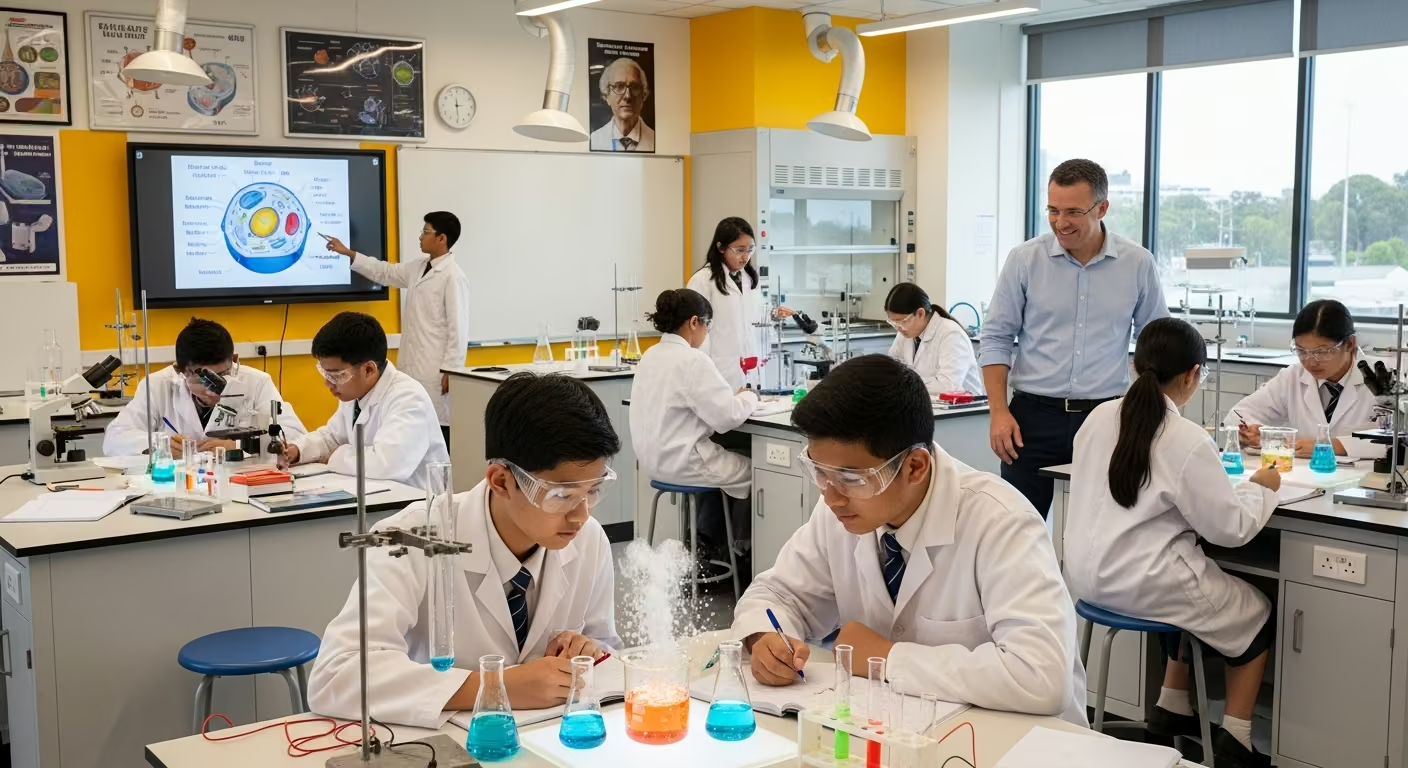
But here’s the good news—targeted support changes everything. A well-run science tuition centre tailors lessons to exactly where your teen is stumbling. Imagine small groups of five or six, where instructors zero in on weak spots like stoichiometry slip-ups or optics illusions. It’s not rote drilling; it’s hands-on havoc—think dissecting virtual frogs on iPads or building mini wind turbines from recyclables. These experiences don’t just pad exam prep; they weave science into the fabric of everyday wonder. Why does your phone’s battery last longer on a cold day? How can we hack photosynthesis to fight hunger? Questions like these turn “I hate science” into “Hey, that’s kinda cool.”
Spotting the Signs Your Teen Needs Extra Help
Before diving deeper, pause and reflect: Is your child zoning out during homework? Skipping science club? Or worse, faking illnesses on lab days? These are red flags waving high. Early intervention isn’t nagging—it’s nurturing potential before it slips away.
What Makes a Top-Tier Science Tuition Centre Stand Out
Of course, not all centres are created equal. I’ve chatted with parents who’ve been burned by flashy ads promising miracles but delivering cookie-cutter classes. So, what sets the stars apart? First off, look for qualified tutors—folks with degrees in the field, not just teaching certs. A physicist who’s tinkered at CERN or a biologist who’s sequenced genomes brings stories that textbooks can’t touch. Next, check the vibe: Is it a stuffy room with whiteboards, or a buzzing lab stocked with microscopes, 3D printers, and even VR goggles for molecule tours? Engagement is king here. And don’t skip the track record—ask for testimonials or success rates. Places boasting 90% improvement in O-level or IGCSE scores? That’s the gold standard.
Key Features to Prioritize in Your Search
To make it easier, here’s a quick checklist:
- Expert Tutors: Advanced degrees and real-world experience.
- Interactive Tools: Labs with modern tech, not dusty charts.
- Personalized Plans: Assessments to customize learning paths.
- Proven Results: Data on grade boosts and student feedback.
Hunt for centres ticking these boxes, and you’re halfway to a win.
Real Stories, Real Results: How Tuition Turns Tides
Let’s talk results, because numbers don’t lie, but stories seal the deal. Take Sarah, a 15-year-old I know from my neighbourhood book club. Last year, she was scraping Cs in physics, her eyes glazing over at velocity vectors. Her folks enrolled her in a local centre after a parent’s night horror show. Three months in, she’s not just acing tests—she’s leading group projects on renewable energy, dreaming of wind farms off the coast. Or consider Jamal, whose chemistry woes stemmed from a shaky foundation in atoms. The centre’s diagnostic quiz pinpointed it early, and with weekly mock practicals, he went from flunking to the top of his class. These aren’t anomalies; they’re the norm when you match kids with the right resources. Studies from education bodies like the OECD back it up—targeted tutoring lifts STEM performance by up to 20%, especially for underserved groups.
The Data Behind the Magic
Beyond anecdotes, consider this: A recent report from the National Science Foundation highlighted how supplementary STEM programs correlate with a 15-25% jump in college enrollment for science majors. It’s not fluff—it’s future-proofing.
Building More Than Just Grades: The Hidden Benefits
Beyond grades, there’s the subtle magic: resilience. Science tuition centres teach kids to fail forward. That botched experiment? Not a flop, but a data point. Instructors frame errors as stepping stones, echoing the trial-and-error ethos of icons like Marie Curie or Elon Musk. This mindset? It’s transferable gold for life—job interviews, startups, you name it. Plus, in a group setting, teens pick up soft skills: debating hypotheses, collaborating on labs, and even presenting findings like mini-TED talks. It’s social science, minus the awkward small talk.
Fostering Lifelong Curiosity and Skills
What starts as exam prep often blooms into passion projects. Kids return home buzzing about black holes or biohacking, sparking family dinner debates that last hours. And those collaboration chops? They shine in team sports, arts, or future boardrooms.
Navigating the Practical Side: Costs, Schedules, and Getting Started
Parents, I get it—time and money are tight. With extracurriculars piling up and bills stacking, shelling out for extra classes feels daunting. But weigh the cost against the payoff: a stronger shot at university spots in competitive fields, or simply a child who loves learning again. Most centres offer trial sessions or flexible packages—maybe bi-weekly blasts for revision seasons. And virtually? Post-pandemic, many blend online modules with in-person zaps, fitting around soccer practice or family dinners. Pro tip: Chat with current families. Their unfiltered takes on class sizes, homework loads, and tutor rapport are worth more than any brochure.
Tips for a Smooth Enrollment
- Schedule a visit—feel the energy firsthand.
- Review contracts for flexibility.
- Track progress with monthly check-ins.
Ease in gradually, and watch commitment grow.
Looking Ahead: From Classroom to Career Launchpad
For students eyeing the long game, these centres double as career compasses. Ever heard of “science cafes”? Some spots host evenings where pros from biotech firms or space agencies spill on day-to-day thrills. It’s networking disguised as fun, helping teens map paths from lab tech to astronaut. In Singapore or the UK, where secondary science feeds into rigorous A-levels or PSLE streams, this edge is crucial. Even in looser systems like the US, it preps for AP exams that unlock scholarships.
Global Perspectives on Science Education
Around the world, from Finland’s play-based labs to Singapore’s drill-down rigor, one truth holds: Early, engaging support levels the field. Your local centre can tap into that global best.
Of course, no centre’s a silver bullet. Home reinforcement matters—quiz your kid over breakfast, tie lessons to Netflix docs like “Our Planet.” But pairing that with pro guidance? It’s the combo punch. If your teen’s science spark is dimming, don’t wait for the next report card gut-punch. Scout a centre that feels like an extension of their curiosity, not a chore.
In wrapping this up, remember: secondary science isn’t about surviving the syllabus; it’s about thriving in a world screaming for innovators. A stellar tuition centre doesn’t just teach—it transforms. It turns question marks into exclamation points, doubts into discoveries. So, if you’re nodding along, thinking of that overwhelmed teen in your life, take the leap. Enroll, observe, and watch the magic unfold. Who knows? The next big idea, solving plastic pollution or curing diseases, might just bubble up from a Tuesday night lab session. Your child’s future self will thank you—and so will the world.