
Introduction
Tate no Yuusha no Nariagari (The Rising of the Shield Hero) is one of the most talked-about isekai anime and light novel series of the past decade. Its rise to fame comes not just from the emotional story of Naofumi Iwatani, the Shield Hero, but also from the fascinating power system and dynamics among the Four Cardinal Heroes.
Each hero is summoned with a legendary weapon — Shield, Spear, Sword, or Bow — and tasked with saving the world from catastrophic waves of monsters. But unlike traditional RPG-style stories, Tate no Yuusha explores betrayal, distrust, and the hard-earned growth of a hero who starts at rock bottom.
In this guide, we’ll break down every hero, their weapons, powers, arcs, and how they shape the story. Whether you’re a new fan exploring the anime or a long-time reader of the manga/light novels, this deep dive will help you understand why the Shield Hero’s journey is one of the most memorable in modern anime.
Who Are the Four Cardinal Heroes?
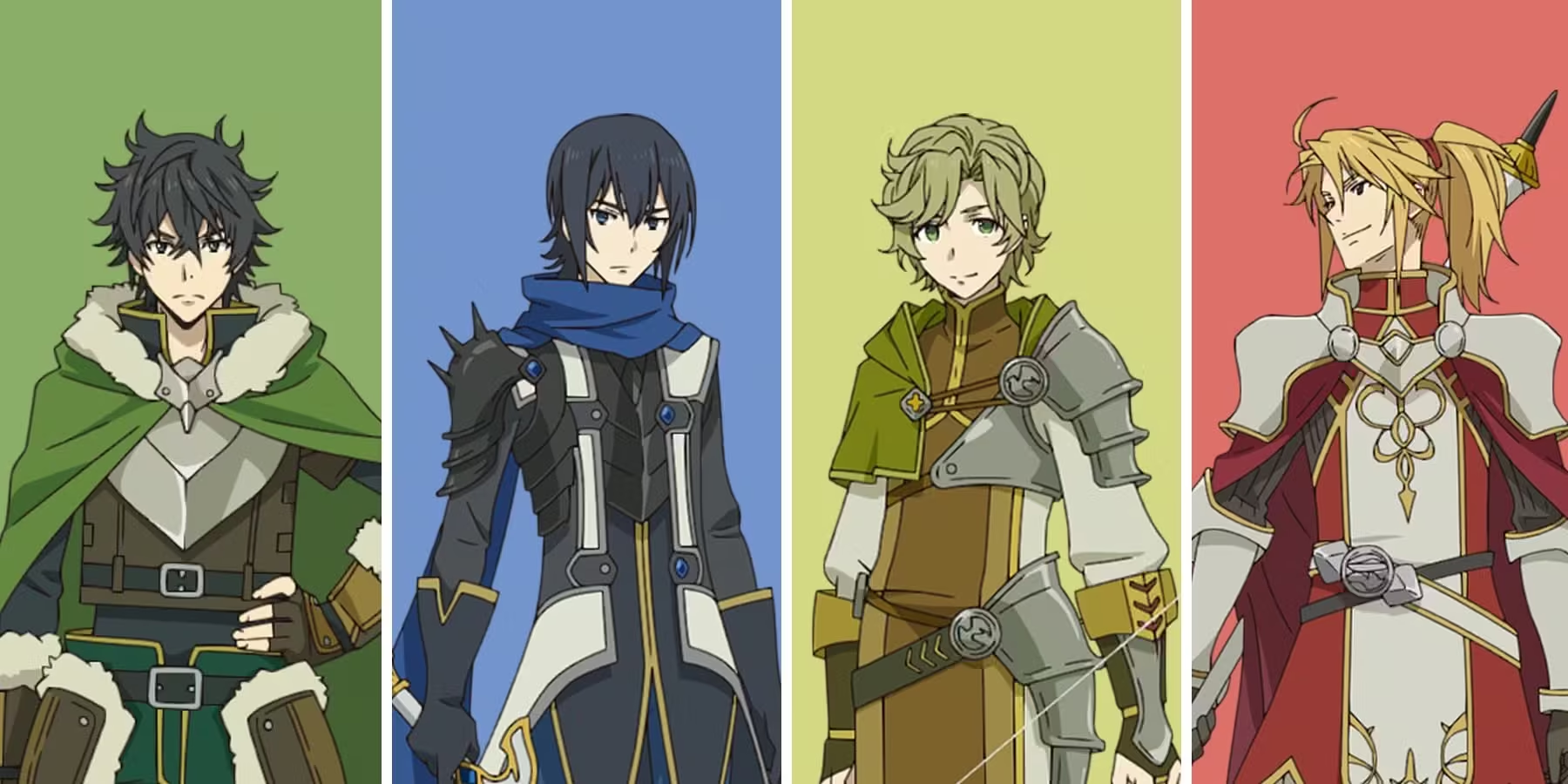
The Four Cardinal Heroes are legendary saviors summoned from different worlds to protect Melromarc and other kingdoms from waves of destruction.
- Naofumi Iwatani – The Shield Hero.
- Motoyasu Kitamura – The Spear Hero.
- Ren Amaki – The Sword Hero.
- Itsuki Kawasumi – The Bow Hero.
Unlike typical fantasy heroes, each comes from modern Japan, transported into this world with their weapons permanently bound to them. While they share a common mission, their personalities, methods, and worldviews clash constantly, creating conflicts that are almost as perilous as the waves themselves.
The Shield Hero (Naofumi Iwatani)
Naofumi’s story starts with betrayal. Framed for crimes he didn’t commit, he is abandoned by allies, ridiculed by the kingdom, and forced to survive without offensive power.
Abilities & Shield Mechanics
- The Shield cannot attack directly.
- Defensive buffs, healing, and support functions.
- Absorbs monster materials to evolve new forms.
- Unlocks “Curse Series” forms when fueled by hatred and despair.
Growth and Evolution of Powers
Naofumi’s evolution is a metaphor for resilience:
- Small Shield → Rage Shield → Iron Maiden Shield.
- Gains crafting, alchemy, and potion-making skills.
- Builds trust with companions like Raphtalia and Filo.
Key Battles and Emotional Highlights
- First wave survival despite betrayal.
- Duel against Motoyasu.
- Rage Shield moments that terrify allies and enemies alike.
“Even if the world hates me, I’ll keep moving forward.” – Naofumi
The Spear Hero (Motoyasu Kitamura)
Motoyasu is brash, flirtatious, and overly trusting. He is often manipulated, especially early on, making him both comedic relief and a frustrating rival for Naofumi.
Spear Combat Style
- High offensive power.
- Long-range thrusting and sweeping attacks.
- Special skills for piercing armor and magical barriers.
Strengths and Weaknesses
- Strength: Strong in direct combat.
- Weakness: Gullible and often distracted.
Relationship with Naofumi
- Rivalry starts after their first duel.
- Eventually grows to respect Naofumi after seeing his determination.
The Sword Hero (Ren Amaki)
Ren is the most composed and serious of the Four Cardinal Heroes. Unlike Motoyasu’s reckless energy or Itsuki’s justice-obsessed mindset, Ren prefers logic, strategy, and independence.
Personality and Role
- Stoic, calm, and often seen as distant.
- He approaches battles like a strategist, analyzing weaknesses.
- Initially dismisses Naofumi due to his shield-only abilities.
Swordsmanship Techniques
- Precise blade strikes that focus on weak points.
- Strong combo attacks for fast-paced battles.
- Sword grows stronger by absorbing monster cores and rare minerals.
Arc Development & Growth
Ren’s character arc shows his struggle with pride and isolation.
- His early arrogance causes him to underestimate enemies.
- He learns humility after disastrous outcomes in certain battles.
- Slowly develops into a more cooperative ally, though not without tension.
The Bow Hero (Itsuki Kawasumi)
Itsuki brings in the “justice hero” archetype. He is idealistic, aiming to punish evil and protect the weak, but his rigid worldview often blinds him to complexities.
Justice-Driven Personality
- Sees himself as a vigilante-like hero.
- Obsessed with the idea of fairness and justice.
- Sometimes hypocritical when judging others too harshly.
Bow Techniques and Long-Range Tactics
- Specializes in ranged combat, keeping enemies at bay.
- Uses multi-shot techniques for crowd control.
- Magical arrows enhance attacks with fire, lightning, and more.
Major Contributions & Failures
- Useful in waves where aerial enemies appear.
- Struggles in close combat situations.
- Has moments where his stubbornness endangers allies.
The Heroes Compared: Shield vs Spear vs Sword vs Bow
Each hero represents a different combat style and worldview, which makes their interactions both compelling and frustrating.
- Shield (Naofumi): Defense, support, resilience.
- Spear (Motoyasu): Aggressive offense, reckless energy.
- Sword (Ren): Precision, logic, discipline.
- Bow (Itsuki): Long-range justice, morality-driven.
In many ways, their weapons symbolize not only their combat roles but also personal flaws and growth arcs.
The Power System of Tate no Yuusha
The Tate no Yuusha world introduces a fascinating legendary weapon system. Each hero’s weapon grows alongside them, unlocking new powers based on their experiences.
Weapons That Grow with the Hero
- Weapons absorb materials from monsters or items.
- Evolution branches create multiple weapon forms.
- Abilities depend on creativity — each hero’s choices affect outcomes.
Spirit Power & Legendary Mechanics
- Weapons are bound by system rules: heroes cannot use each other’s weapons.
- Spirit energy enhances attacks and unlocks special forms.
- Legendary weapons can curse their wielder if misused.
Curses and Blessings
- Naofumi’s Rage Shield is a curse-born power fueled by hate.
- Motoyasu’s spear sometimes rebels if used recklessly.
- Each weapon tests its wielder’s resolve, granting or denying strength.
Naofumi’s Shield Transformations
Among all weapons, Naofumi’s Shield has the most creative and symbolic transformations.
Rage Shield & Curse Series
- Triggered by hatred, betrayal, and anger.
- Powerful flames and destructive defense abilities.
- Dangerous — damages allies and consumes Naofumi’s life force.
Utility Shields and Unique Functions
- Air Strike Shield: Creates temporary floating shields.
- Shield Prison: Traps enemies inside barriers.
- Iron Maiden Shield: A devastating execution move.
Symbolism of the Shield
- Represents endurance, resilience, and silent strength.
- Naofumi’s inability to attack mirrors his initial helplessness.
- Over time, the Shield evolves into a weapon of trust and teamwork.
Major Arcs Involving the Heroes
The story of Tate no Yuusha shines in its arc-based progression, where the heroes’ dynamics change drastically.
Wave Battles
- All four heroes must fight together to repel waves of destruction.
- Early waves expose their lack of unity and overconfidence.
- Naofumi proves himself repeatedly, despite the kingdom’s hatred.
Inter-Hero Conflicts
- Motoyasu duels Naofumi, manipulated by false accusations.
- Ren and Itsuki clash over ideals of justice and leadership.
- Internal rivalries often weaken the group’s defense against larger threats.
Encounters with Other Worlds
- Heroes meet counterparts from alternate worlds.
- Expands the lore beyond Melromarc.
- Forces heroes to question their roles and powers.
Tate no Yuusha Character Development
One of the strongest elements of Tate no Yuusha is how the heroes evolve, both in power and personality.
Betrayal and Redemption
- Naofumi’s betrayal by Malty sets the tone for his journey.
- Over time, he learns to trust again, mainly through Raphtalia and Filo.
- The other heroes face their own betrayals, mostly from misplaced pride or naivety.
Friendship, Rivalry, and Trust
- Early arcs highlight distrust among the Four Heroes.
- Later, small moments of respect and cooperation show their growth.
- Naofumi emerges as the most dependable, despite starting as the weakest.
Naofumi’s Journey as an Outcast Hero
- His transformation from “villain” to “true hero” is the central theme.
- Fans resonate with Naofumi because he represents persistence against injustice.
Symbolism of Each Hero Weapon
The Four Legendary Weapons are more than tools; they embody the traits and flaws of their wielders.
- Shield (Naofumi) – Defense, perseverance, and the burden of protection.
- Spear (Motoyasu) – Passion, recklessness, and misplaced trust.
- Sword (Ren) – Discipline, independence, and pride.
- Bow (Itsuki) – Justice, morality, and stubborn self-righteousness.
This symbolism deepens the narrative, showing that the heroes’ struggles are not just physical but also internal battles of character.
Manga vs Anime Differences
Fans often debate how well the anime adaptation captures the depth of the light novels and manga.
Key Differences in Hero Portrayals
- The anime gives more focus to Naofumi, while Ren, Itsuki, and Motoyasu’s arcs are trimmed.
- Some side battles and character moments are more detailed in the manga.
Changes in Battles and Arcs
- Anime often condenses wave battles for pacing.
- Certain Shield transformations and side quests appear only in the manga/novels.
- The “Curse Series” feels darker in the written versions compared to the anime visuals.
Fan Reactions & Theories
Tate no Yuusha has built a massive global fanbase, and much of the discussion revolves around the heroes.
- Fans admire Naofumi’s resilience – many relate to his struggle against false accusations.
- Motoyasu is polarizing – some find him funny, others frustrating.
- Theories about the Shield’s true potential – is it the strongest weapon?
- Speculation on future arcs – will Naofumi surpass even the other worlds’ heroes?
Online forums, Reddit, and anime communities often explode with theories after major reveals, making this series one of the most discussed isekai of recent years.
Predictions for Tate no Yuusha’s Future
Looking ahead, fans expect even more intense arcs as Naofumi and the other heroes continue to grow.
- Possible Power-Ups: New Shield evolutions, curse purifications, and team-based abilities.
- Hero Evolution: Ren may learn humility, Itsuki may refine his justice ideals, and Motoyasu may finally grow out of his gullibility.
- Naofumi’s Role: Likely to remain the central figure, proving that defense and strategy can outshine raw power.
Final Thoughts
Tate no Yuusha no Nariagari isn’t just another isekai — it’s a story about endurance, mistrust, and finding strength through hardship. The Four Cardinal Heroes each bring something unique to the table, but Naofumi’s Shield Hero stands out as one of the most inspiring protagonists in modern anime.
Through betrayal, pain, and struggle, Naofumi’s growth shows us that even when the world turns against you, true power comes from resilience, trust, and the will to move forward.
For fans, the series offers not just flashy battles, but also emotional depth, symbolism, and an evolving world that keeps us hooked for more.
FAQs
1. Who is the strongest hero in Tate no Yuusha?
Naofumi, the Shield Hero, is often considered the strongest because of his versatile shield evolutions and curse series powers, though his strength lies more in defense and strategy than pure offense.
2. Why is Naofumi treated unfairly at the start?
He is falsely accused of crimes due to political manipulation. This betrayal sets up his journey as the “outcast hero.”
3. Do the other heroes respect Naofumi later?
Yes, although it takes time. Initially, Ren, Itsuki, and Motoyasu dismiss him, but as Naofumi proves himself in battles and waves, they slowly start to respect him.
4. What makes the Shield unique compared to other weapons?
Unlike a Spear, Sword, or Bow, the Shield cannot attack directly. It forces Naofumi to focus on defense, strategy, and teamwork, making his journey very different.
5. Are there more than four heroes?
Yes, later arcs introduce Heroes from other worlds, expanding the lore beyond the Four Cardinal Heroes of Melromarc.
6. Which is better: the manga or the anime?
Both have their strengths. The anime has strong visuals and a soundtrack, while the manga and light novels provide deeper character exploration and darker themes.
7. Will there be more seasons of Tate no Yuusha?
Yes, with the ongoing source material, future anime seasons are expected to adapt more arcs and explore Naofumi’s continued evolution.